 Save
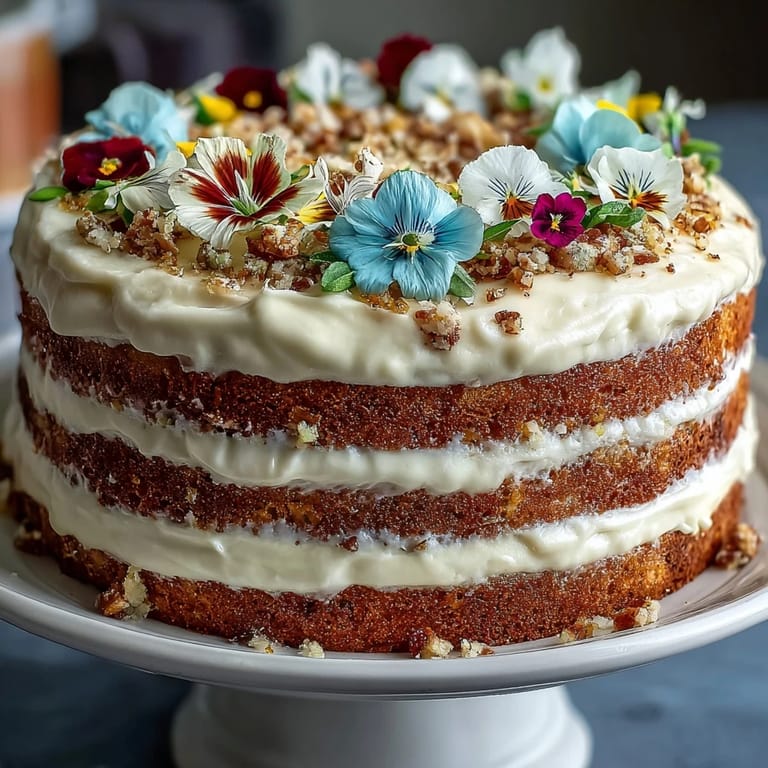
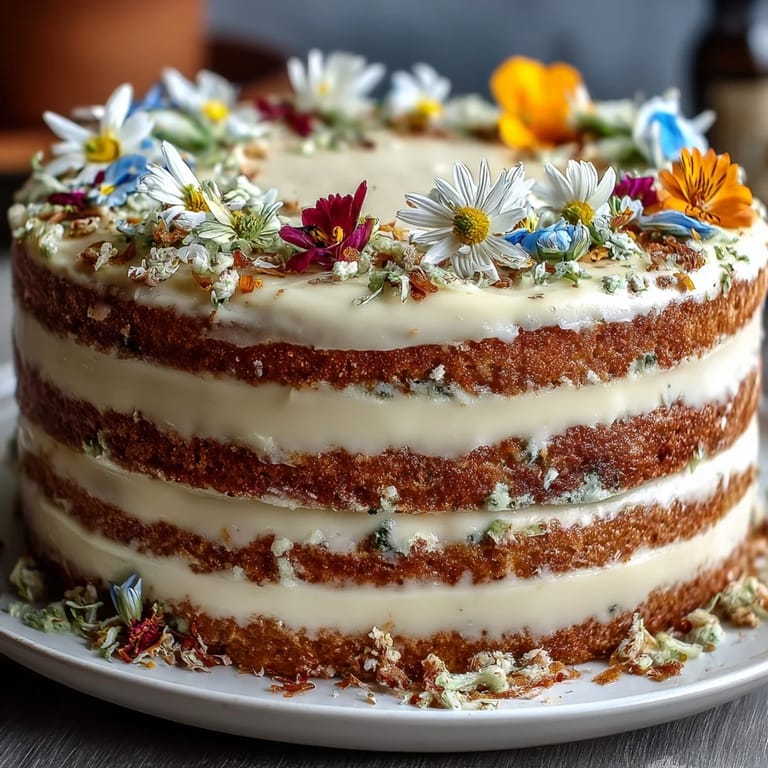
Save There's something about the first warm afternoon when you can finally open all the windows that makes you want to bake something beautiful. I was standing in my kitchen last April, watching the light pour across the counter, when I decided to make this cake—not because anyone asked for it, but because the season felt like it needed something delicate and bright. The moment I cracked open those lemons and smelled that sharp, perfect citrus, I knew this was exactly right. Layers of tender sponge, tangy lemon curd that catches the light like liquid gold, clouds of whipped cream, and those edible flowers scattered across the top like you've just brought in a piece of the garden.
I made this cake for my sister's birthday tea, and I'll never forget how quiet the room went when I brought it to the table. The spring flowers caught the afternoon light, and suddenly everyone's phones came out—not because the cake was complicated, but because it was simply beautiful in a way that felt effortless. That's when I learned that sometimes the best recipes are the ones that make people feel like you've invited them into something special.
Ingredients
- All-purpose flour (2 1/2 cups): Use fresh flour for the lightest crumb; older flour can make the cake dense and heavy.
- Baking powder and baking soda (2 tsp and 1/2 tsp): These work together to create lift, but measure carefully because too much creates a metallic taste.
- Unsalted butter (1 cup softened, plus 1/2 cup cubed for curd): Softened butter incorporates air when creamed, which is the foundation of this cake's tender texture.
- Granulated sugar (1 3/4 cups plus 3/4 cup for curd): The creaming process matters more than the ingredient itself—you're building volume and incorporating tiny air pockets.
- Large eggs, room temperature (4 plus 4 yolks for curd): Cold eggs won't emulsify properly; let them sit out for 30 minutes to make a real difference.
- Buttermilk (1 cup): It keeps the crumb tender and adds subtle tang that balances the sweetness without tasting sour.
- Lemon juice and zest (3/4 cup juice plus zest from 3 lemons total): Fresh lemons are non-negotiable here; bottled juice tastes thin and watery by comparison.
- Heavy cream (2 cups): Cold cream whips better and holds peaks longer, so chill your bowl and beaters if you have time.
- Edible flowers (1–2 cups): Buy from specialty markets or grow them yourself; grocery store flowers are often treated with pesticides and not safe to eat.
Tired of Takeout? 🥡
Get 10 meals you can make faster than delivery arrives. Seriously.
One email. No spam. Unsubscribe anytime.
Instructions
- Set up and preheat:
- Get your three cake pans ready with parchment, and heat your oven to 350°F (175°C). This moment of preparation—greasing pans, tearing parchment, making sure everything's within reach—is when baking actually becomes calm instead of chaotic.
- Mix your dry ingredients:
- Whisk flour, baking powder, baking soda, and salt in a medium bowl until they're evenly combined. This ensures the leavening agents are distributed throughout, not clumped in one spot.
- Cream butter and sugar:
- Beat softened butter with sugar for about 3 minutes until it's pale and fluffy—this is where the magic happens. You're not just mixing; you're incorporating air, which creates the lift in your cake.
- Add eggs carefully:
- Drop in one egg at a time, beating well after each addition so the mixture stays emulsified. If you dump all the eggs in at once, the batter can separate.
- Incorporate vanilla and lemon zest:
- Mix in vanilla extract and fresh lemon zest, letting the fragrance fill your kitchen. The zest adds brightness and little flavor bursts throughout the cake.
- Alternate wet and dry ingredients:
- Add the dry mixture and buttermilk in three additions, starting and ending with dry ingredients. Mix just until combined; overmixing develops gluten and toughens the cake.
- Divide and bake:
- Divide batter evenly among the three pans, smooth the tops, and bake for 25–30 minutes until a toothpick comes out clean. The cakes should spring back when you touch them lightly.
- Cool with patience:
- Let cakes rest in their pans for 10 minutes so they firm up, then turn them out onto wire racks. Cooling completely prevents the layers from sliding around during assembly.
- Make the lemon curd:
- Set a heatproof bowl over simmering water and whisk lemon juice, zest, sugar, and egg yolks until thickened and pale yellow, about 8–10 minutes. The curd will continue to thicken as it cools, so don't overdo it.
- Finish the curd with butter:
- Remove from heat and whisk in cubed butter until the mixture is completely smooth and silky. Let it cool completely before assembly—warm curd will melt your whipped cream.
- Whip the cream:
- Beat cold heavy cream with powdered sugar and vanilla until stiff peaks form, which takes about 2–3 minutes with an electric mixer. Don't walk away; overwhipping turns cream into butter.
- Assemble the cake:
- Place the first cake layer on your serving platter, spread half the cooled lemon curd across the top, then add a layer of whipped cream. Repeat with the second layer, top with the third cake layer, and crown it all with a thick, generous layer of whipped cream.
- Decorate just before serving:
- Scatter your edible flowers across the whipped cream and add lemon zest curls if you like, right before bringing the cake to the table. Flowers look their freshest when they've just been placed.
 Save
Save What I love most about this cake is that it works for quiet mornings when you're making something just for yourself, and it works just as beautifully when you're trying to impress people you care about. There's no pretense in it—just good ingredients, simple techniques, and the understanding that elegance is often just care taking visible form.
Why This Cake Feels Like Spring
The first time I served this at an Easter gathering, someone asked me what made it feel so different from other layer cakes. I think it's partly the color—the pale yellow sponge, the golden curd, the bright white cream—but mostly it's that combination of bright lemon and edible flowers that says the season has turned. There's no heavy chocolate, no dark spices; instead, it's all about lightness and the specific joy of finally having fresh, fragrant things growing again. The cake tastes the way late afternoon light feels on your skin.
The Lemon Curd Technique That Changed Everything
I learned the hard way that lemon curd is temperamental when you don't respect the double-boiler method. I once tried to make it directly over heat, thinking I could speed things up, and ended up with scrambled eggs floating in lemon juice. The water bath gives you gentle, even heat so the eggs thicken into silky curd instead of turning into an omelet. It takes longer, but those extra minutes are what separate a cake that feels thrown together from one that feels intentional.
Assembly Secrets and Practical Magic
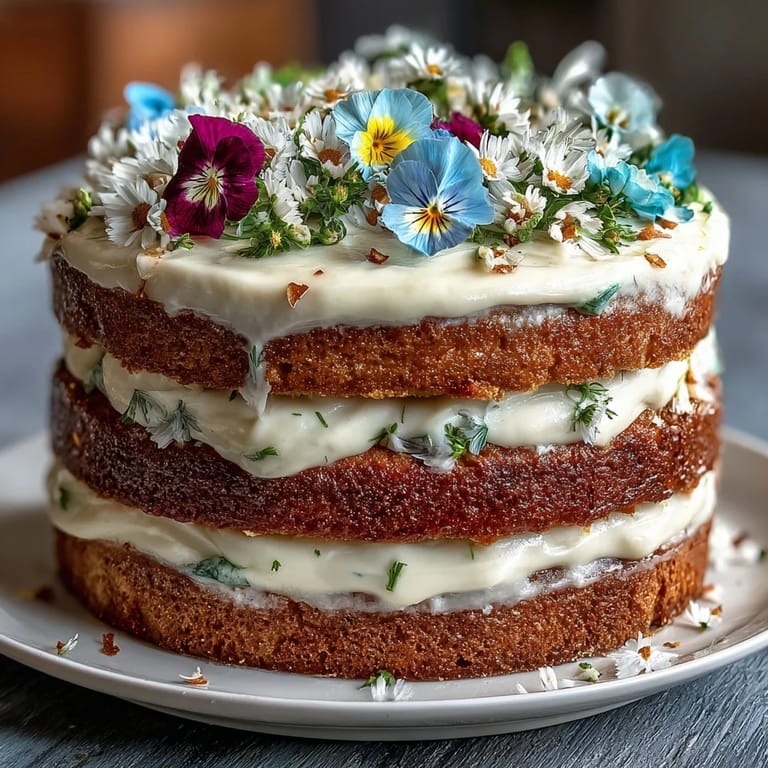
The truth about naked cakes is that they look effortless, but there's actually strategy involved. You want your layers cold so they don't shift, your curd cooled so it doesn't weep through the cream, and your whipped cream beaten just to the point where it holds its shape but still looks slightly soft and rustic. I've learned to assemble everything in a cool kitchen, and if it's warm outside, I'll even chill my serving platter.
- Use an offset spatula with a gentle hand; you're aiming for visible layers and slightly imperfect frosting, not smoothness.
- The prettiness comes from the flowers and the lemon zest, so don't overthink the cream application—roughly textured is actually more elegant.
- Serve the cake chilled or at room temperature within a few hours of assembly so the layers stay distinct and the flavors shine.
 Save
Save This cake has become my answer to so many moments—when I want to celebrate something, when I want to say thank you, when I want to remind someone that they matter. It's the kind of recipe that gets made again and again, each time slightly different because you're cooking with the seasons and your own mood, but always recognizable in that bright, joyful way.
Questions & Answers
- → How do I ensure the cake layers stay moist?
Use buttermilk and do not overmix the batter; alternate dry ingredients with the buttermilk and bake until a toothpick comes out clean but the cake is still tender.
- → Can I make the lemon curd ahead?
Yes, lemon curd can be prepared in advance and refrigerated to allow flavors to develop before assembling the cake.
- → What types of edible flowers work best for decoration?
Pansies, violets, marigolds, and nasturtiums add color and mild floral notes; always ensure the flowers are pesticide-free and safe for consumption.
- → How should I store the assembled cake?
Keep the cake refrigerated to maintain the freshness of the lemon curd and whipped cream layers, covering it to prevent drying.
- → Is there a way to adjust the cream texture?
Substituting half of the whipped cream with mascarpone creates a richer, creamier filling for a denser mouthfeel.