 Save
Save There's something almost magical about watching bright green peas transform into silk in a blender, then swirl into cream and cheese like they belong there naturally. I stumbled onto this version of Alfredo on a Tuesday when my farmer's market haul included frozen peas I'd meant to roast, but the kitchen felt cold and I craved something warm instead. What started as improvisation became the dish I make whenever I need to feel both comforted and like I'm doing something good for myself in the same bite.
I made this for my neighbor last spring when she'd just moved in, and she sat at my kitchen counter watching the sauce come together, asking why nobody had shown her this version of Alfredo before. Her teenage son ate three helpings without realizing what made it green, then felt betrayed and delighted when she told him. Now it's the dish she requests, which feels like the highest compliment a simple weeknight pasta can receive.
Ingredients
- Fettuccine or linguine (12 oz): Choose whichever shape makes you happy; the ribbons catch the sauce beautifully, but penne works just as well if that's what's in your cupboard.
- Unsalted butter (2 tbsp): This is your flavor foundation, so don't skip it or swap it for oil, which I learned the hard way when I tried being clever.
- Garlic cloves, minced (3): Fresh garlic is non-negotiable here; it perfumes the whole sauce and reminds you you're cooking something real.
- Heavy cream (1 cup): This is what makes the sauce luxurious, and yes, you need the full amount for the right texture.
- Grated Parmesan cheese (1 cup): Freshly grated makes a difference in how smoothly it melts; pre-grated often contains anti-caking agents that can make the sauce grainy.
- Whole milk (1/2 cup): It acts as a buffer, keeping the cream from breaking and making everything more forgiving.
- Freshly ground black pepper (1/4 tsp): Fresh grinding matters because pre-ground loses its bite, and you want that subtle heat here.
- Frozen green peas (1 1/2 cups, thawed): Frozen peas are actually frozen at peak ripeness, so they're more nutritious than fresh ones that traveled across the country.
- Fresh basil leaves (1/4 cup, optional): If you have it, use it; if not, the dish still sings, but basil adds an herbal brightness that feels like a secret ingredient.
- Lemon juice (1 tbsp): This keeps the sauce from feeling heavy and makes all the flavors pop without tasting acidic.
- Salt, to taste and for pasta water: Remember to salt your pasta water like the sea; it's your only chance to flavor the pasta itself.
Tired of Takeout? 🥡
Get 10 meals you can make faster than delivery arrives. Seriously.
One email. No spam. Unsubscribe anytime.
Instructions
- Get water boiling and start the pasta:
- Fill a large pot with water, salt it generously, and bring it to a rolling boil while you gather everything else. The pasta water will become your secret weapon later, so don't drain it without saving some first.
- Blend the pea purée while pasta cooks:
- While waiting, combine thawed peas, basil if you're using it, lemon juice, and a pinch of salt in your blender or food processor, then blend until completely smooth and almost silky. If it seems thick, add a splash of water to loosen it up.
- Melt butter and invite the garlic:
- In a large skillet over medium heat, melt butter and add minced garlic, stirring for just one minute until it becomes fragrant but not brown. The moment garlic turns color, it shifts from aromatic to bitter, so stay close and keep stirring.
- Build the cream sauce base:
- Pour in the heavy cream and milk together, stirring to combine, then let it warm through until small bubbles appear around the edges. Add the grated Parmesan and black pepper, stirring constantly for 2-3 minutes until the sauce thickens slightly and tastes silky on your tongue.
- Fold in the green pea magic:
- Add the pea purée and stir gently until it swirls through completely and everything is heated through. If the sauce looks too thick, add reserved pasta water a tablespoon at a time until it coats the pasta beautifully but still feels creamy.
- Bring pasta and sauce together:
- Toss your drained pasta with the green pea Alfredo sauce until every strand is coated, letting the sauce settle into all the little curves. Taste as you go and adjust the salt and pepper because this is your moment to make it exactly how you like it.
- Plate and celebrate:
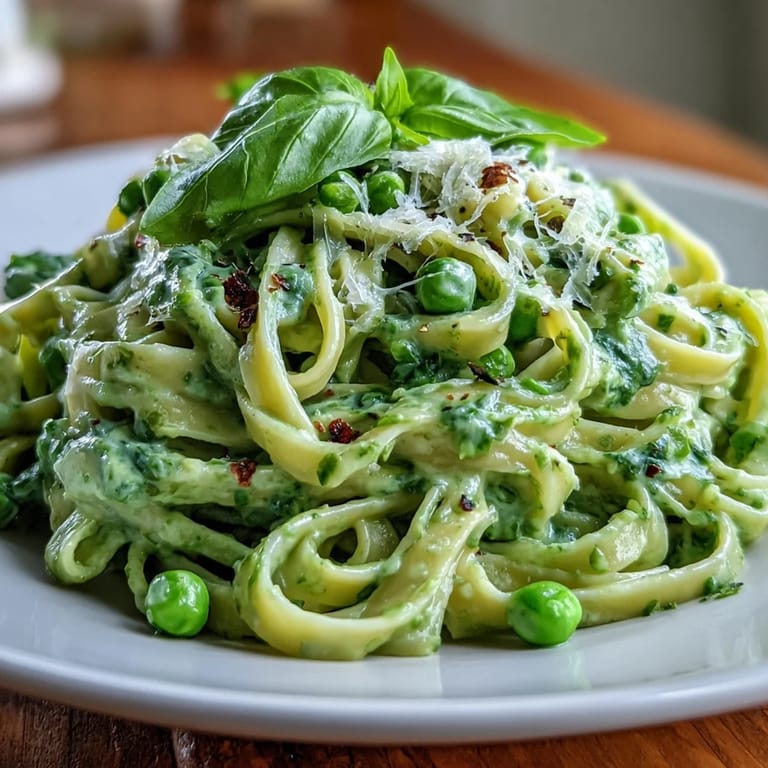
- Serve immediately into bowls while everything is hot, finishing each one with extra Parmesan, fresh basil or parsley, and cracked black pepper. The warmth carries all the flavors forward, so don't let it sit.
 Save
Save My kid who claims to hate vegetables asked for seconds the first time I made this, which made me realize that sometimes it's not the vegetable people resist, it's the way we present it. Watching her eat something green without negotiation felt like I'd unlocked something, and now she asks if I can make it with different herbs.
Why This Sauce Feels Different
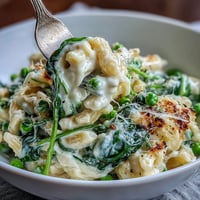
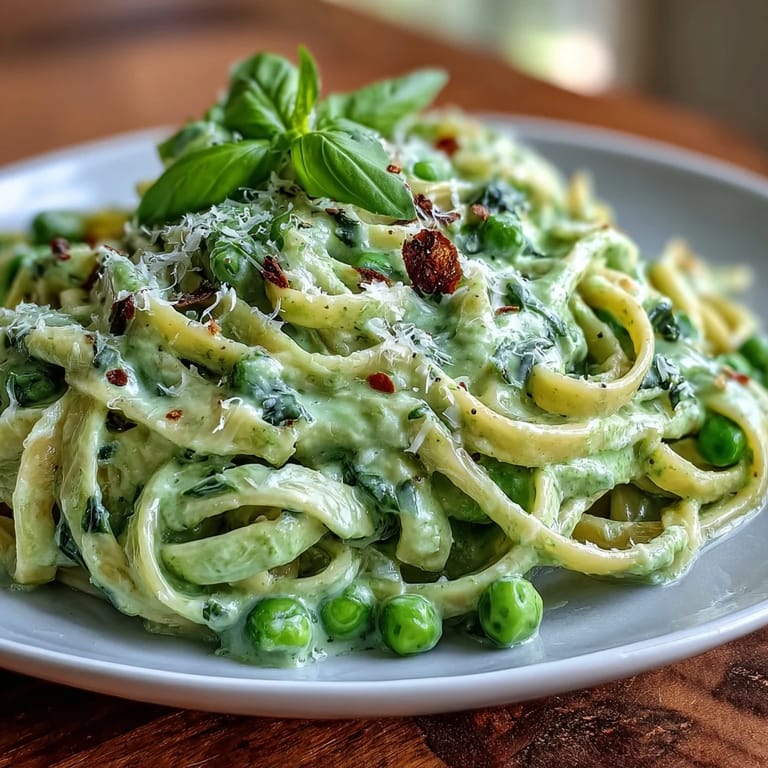
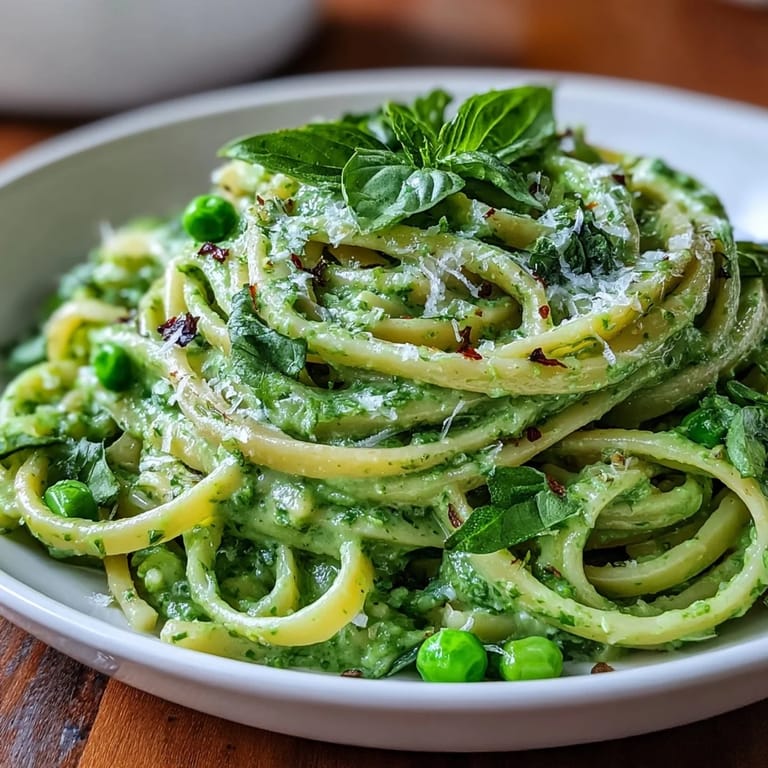
Most Alfredo sauces are pure indulgence with nothing pretending to be wholesome, and that's beautiful, but this one lets you have both things at once. The peas don't announce themselves loudly; they blend into the cream like they've always belonged there, adding sweetness and body while shifting the color from beige to this soft pistachio green that looks like spring on a plate. You're not eating health food or junk food; you're just eating something genuinely good that happens to include vegetables, which somehow feels like the most honest way to cook.
The Texture Game
The secret to this sauce tasting restaurant-quality is understanding that Alfredo is a balance of thickness and flow. Too thick and it coats your mouth like paint; too thin and it slides off the pasta like bathwater. The milk tempering the heavy cream gives you more flexibility than classic Alfredo, and the pasta water at the end is genuinely crucial because it understands the starch in the pasta and works with it instead of against it. The pea purée also adds its own moisture, so you're juggling textures the whole time, which sounds complicated but actually feels intuitive once you're standing there with a spoon tasting it.
Timing and Temperature Matter
This is one of those dishes where everything should happen around the same time, which means you actually need to read through the instructions before you start cooking instead of just winging it. By the time your pasta is draining, your sauce should be mostly done, and when you combine them, it all becomes one unified thing still steaming and full of promise. I learned to prep the pea purée while the pasta water heats up, which meant I wasn't standing around waiting, and the whole rhythm became natural instead of stressful.
- Start the pasta before anything else because it sets your timeline and gives you thinking space.
- Don't let the cream and milk simmer too hard or the Parmesan will break; gentle heat is your friend here.
- Serve immediately because sauce breaks down and separates if it sits, and you've come this far to not eat at its best.
 Save
Save This pasta has become the thing I make when I want to feel capable in the kitchen without spending hours there, and somehow it always tastes like I did something remarkable. It's the kind of food that makes people happy without needing to be complicated, which might be the truest definition of good cooking.
Questions & Answers
- → Can I make this dish ahead of time?
The sauce can be prepared up to 24 hours in advance and stored in the refrigerator. Reheat gently with a splash of milk or pasta water to restore consistency. For best results, cook pasta fresh and toss with reheated sauce just before serving.
- → What pasta shapes work best?
Fettuccine and linguine are ideal for coating with the creamy sauce, but penne, rigatoni, or gemelli also work well. The sauce clings beautifully to ridged shapes, and gluten-free pasta can be substituted without compromising flavor or texture.
- → How do I achieve the smoothest purée?
Thaw frozen peas completely and pat them dry before blending. Add the lemon juice and a pinch of salt to help break down fibers. If needed, add warm water one tablespoon at a time until silky smooth. A high-speed blender yields the finest texture.
- → Can I use fresh peas instead of frozen?
Absolutely! Fresh shelled peas work wonderfully when in season. Blanch them for 2-3 minutes in boiling water, then plunge into ice water before puréeing. This preserves their bright color and sweet flavor while ensuring tender texture.
- → How can I make this dairy-free?
Substitute unsalted plant-based butter for dairy butter, use full-fat coconut cream or cashew cream instead of heavy cream and milk, and replace Parmesan with vegan Parmesan or nutritional yeast. The sauce will still be creamy and satisfying.
- → What proteins pair well with this dish?
Grilled chicken breast, pan-seared shrimp, or baked salmon complement the creamy sauce beautifully. For a vegetarian protein boost, add white beans or chickpeas directly to the sauce, or serve with a side of crispy tofu.
- → Why does my sauce sometimes separate?
Sauce separation occurs when high heat causes the dairy proteins to coagulate. Maintain a gentle simmer rather than a rolling boil, and stir constantly. If separation occurs, whisk vigorously off the heat or blend with an immersion blender to emulsify.