 Save
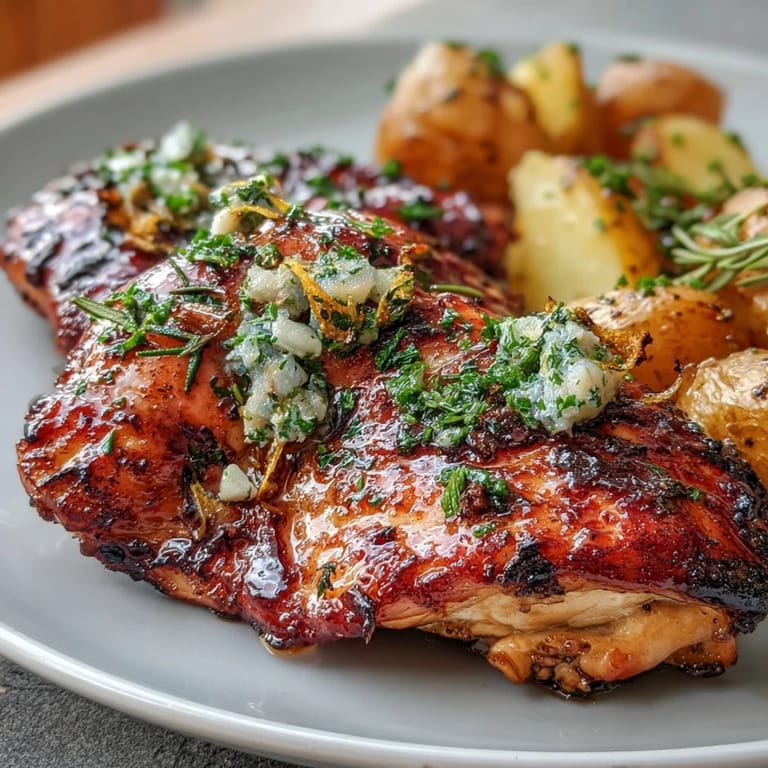
Save There's something about the smell of lemon and rosemary hitting a hot oven that makes you feel like you've got your life together, even if you're still in yesterday's clothes. I discovered this chicken on a rainy Sunday when I had exactly four people coming over and no real plan, just ingredients and hope. The kitchen filled with this golden, herbaceous steam that somehow made the whole afternoon feel intentional. Something about roasting a whole bird with potatoes clustered around it feels both restaurant-worthy and deeply personal—like you're cooking for people who matter.
I made this the night my sister finally admitted she was moving across the country, and we sat around the kitchen island picking at the last shreds of chicken while it was still warm. Nobody wanted dessert or coffee—we just kept coming back for one more potato, one more piece. That's when I realized this dish does something beyond feeding people; it creates the kind of moment where you forget you're supposed to be sad.
Ingredients
- 1 whole chicken (about 4 lbs / 1.8 kg), giblets removed: Buy it fresh if you can—the difference in flavor is real, and your skin will brown more evenly.
- 3 tbsp olive oil: Use good quality here; it's not just fat, it's flavor carrying all those herbs directly into the meat.
- 2 lemons (1 zested and juiced, 1 sliced): The zest brings brightness that juice alone can't deliver, and those slices in the cavity perfume the entire bird from inside.
- 4 cloves garlic, minced: Don't use pre-minced; the fresh stuff will taste sharp and alive instead of dull and tired.
- 2 tbsp fresh rosemary, finely chopped: This is the backbone of the whole thing—woody, aromatic, unmistakably Mediterranean.
- 2 tbsp fresh thyme, finely chopped: Thyme plays the subtle supporting role that makes rosemary shine even brighter.
- 1 tbsp fresh parsley, finely chopped: Parsley isn't just garnish here; it adds freshness and mellows the intensity of the other herbs.
- 1½ tsp sea salt: Salt is what makes all these herbs taste like themselves, not like you just threw green stuff at a chicken.
- 1 tsp freshly ground black pepper: Freshly ground is non-negotiable—pre-ground tastes like the inside of a cabinet that's been closed for six months.
- 2 lbs (900 g) baby potatoes, halved: Halving them cuts the cooking time and creates more surface area to turn golden and crispy.
- 2 tbsp olive oil for potatoes: Don't skimp here either; the potatoes need enough fat to caramelize properly.
- 1 tsp sea salt and ½ tsp black pepper for potatoes: Season them separately so you control the flavor rather than relying on drippings alone.
- 2 tbsp fresh parsley, chopped (for garnish): A final sprinkle of green makes it look like you know what you're doing, even if you winged it.
Tired of Takeout? 🥡
Get 10 meals you can make faster than delivery arrives. Seriously.
One email. No spam. Unsubscribe anytime.
Instructions
- Preheat and prepare:
- Set your oven to 425°F and pat that chicken completely dry—this is the secret to crispy skin, and it takes thirty seconds that changes everything. Place it in a roasting pan big enough that potatoes can nestle around it later without crowding.
- Build your herb paste:
- Combine the oil, lemon zest, juice, garlic, and all the herbs in a small bowl, crushing everything together with the back of a spoon until it looks like a fragrant, chunky sauce. This is your golden ticket to flavor.
- Coat the chicken thoroughly:
- Rub that paste all over the outside of the bird, but don't forget to slip your fingers under the skin and spread it around the breast and thighs—this is where the magic happens. Stuff the lemon slices into the cavity and let them do their thing while everything roasts.
- Arrange the potatoes:
- Scatter your halved baby potatoes around the chicken, drizzle them with olive oil, and toss them gently so they're all coated and sitting in a single layer. Season them separately so they don't taste like an afterthought.
- Roast low and slow:
- Put the whole pan in the oven for about 1 hour and 10 minutes, until the juices run clear when you poke the thigh and a thermometer reads 165°F. If the potatoes look pale toward the end, don't panic—that's why the next step exists.
- Optional golden finish:
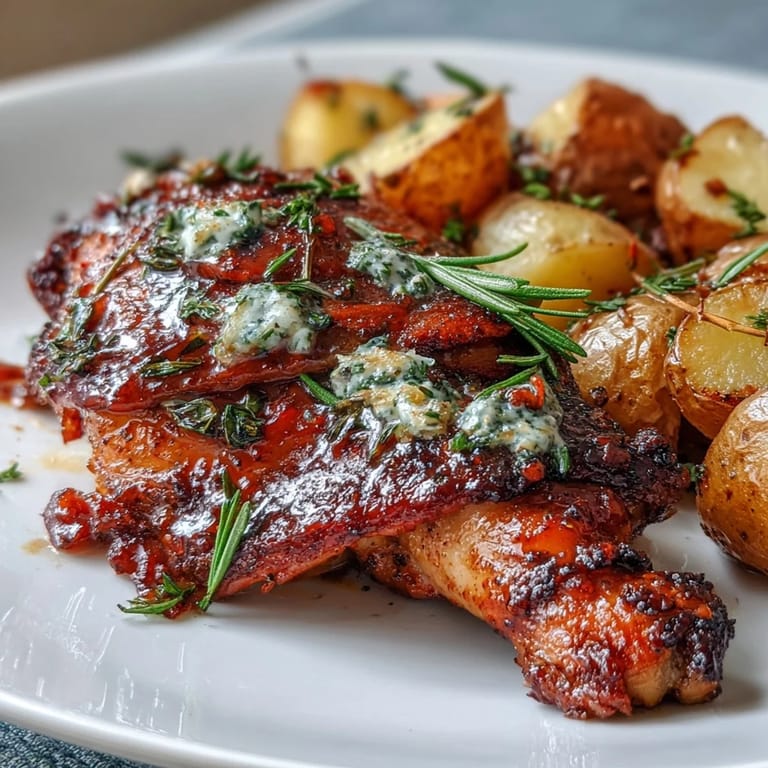
- Pull the chicken out carefully, switch the oven to broil, and give those potatoes 5-7 minutes to turn the color of old pennies. Watch them because broilers have moods and can go from golden to burnt in seconds.
- Rest and serve:
- Let the chicken sit for ten minutes—this keeps everything juicy instead of letting all the goodness run out the second you cut into it. Sprinkle parsley over everything and bring it to the table while it's still steaming.
 Save
Save My neighbor watched through the kitchen window as I pulled this out of the oven, and she came over asking what I'd done differently. I realized then that this recipe isn't really about technique—it's about the simplest ingredients smelling extraordinary when they're roasted together, which somehow makes people feel cared for.
The Secret to Crispy Skin
Crispy skin is eighty percent drying and twenty percent the heat of the oven. Most people skip the first part because it feels fussy, but those paper towels are the difference between skin that cracks when you bite it and skin that feels like rubber. I've also found that starting at a higher temperature and not opening the oven door for at least the first forty minutes means the exterior sets before the interior has time to dry out.
Why Fresh Herbs Matter More Than You Think
Dried herbs have their place, but in this dish they're not it. Fresh rosemary and thyme taste like a spring garden captured in leaf form, while dried versions taste like someone compressed them into sad little pebbles. The flavor difference is so dramatic that it's worth buying a plant and keeping it on a sunny windowsill year-round, which also makes your kitchen smell intentional even on days when you're making toast.
Making This Your Own
The beauty of this recipe is that it's a template more than a rule book. I've added everything from fresh tarragon to a pinch of fennel seeds, or swapped the potatoes for root vegetables that happened to be in the crisper drawer. The core concept—herb paste, whole bird, roasted vegetables, high heat—stays the same, and everything else is just improvisation.
- Marinate the chicken for up to twenty-four hours ahead if your schedule is chaotic, which most of ours are.
- If you can't find fresh herbs, at least get fresh rosemary because it carries the whole identity of this dish.
- Serve with something acidic like a simple salad or roasted lemon wedges to cut through the richness and make people want to eat more.
 Save
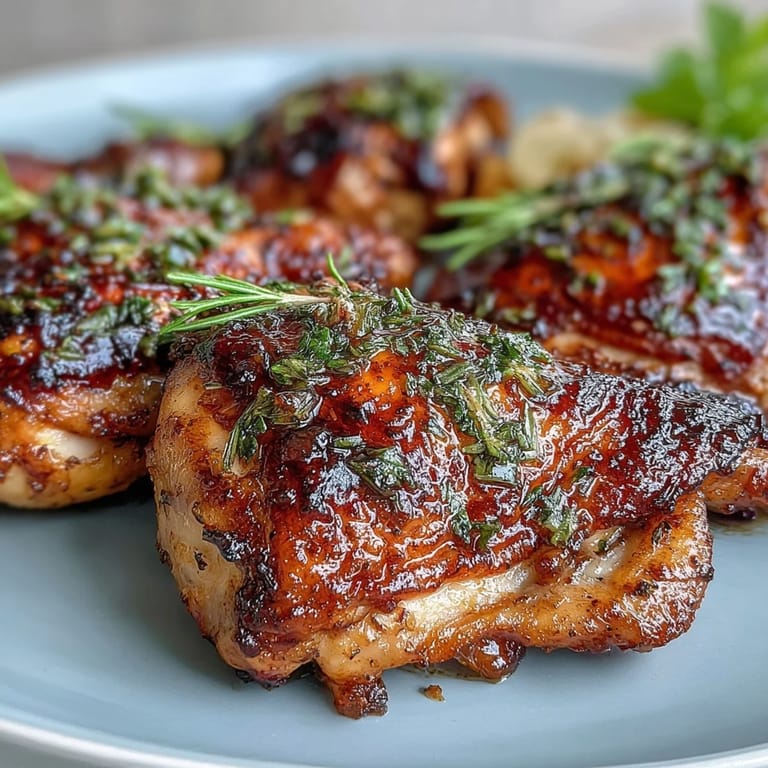
Save This chicken has become the meal I make when I want people to feel welcomed, when I want to prove I care without saying it out loud. It's the kind of food that tastes like you spent the whole day cooking, even though you really just mixed paste and waited.
Questions & Answers
- → What herbs pair best with lemon in this dish?
Fresh rosemary, thyme, and parsley complement lemon's brightness, adding aromatic depth and balance to the roasted chicken.
- → How do you ensure crispy skin on the chicken?
Patting the chicken dry before roasting and cooking at a high temperature helps render fat and crisp the skin beautifully.
- → Can I prepare the chicken in advance?
Marinating the chicken in the lemon and herb mixture up to 24 hours before roasting intensifies the flavors and improves tenderness.
- → What is the best way to check for doneness?
Use a meat thermometer inserted into the thickest thigh; the chicken is done when it reaches 165°F (74°C).
- → Are there suitable potato alternatives?
Fingerlings or small Yukon Gold potatoes can substitute baby potatoes without altering the dish's flavor profile significantly.