 Save
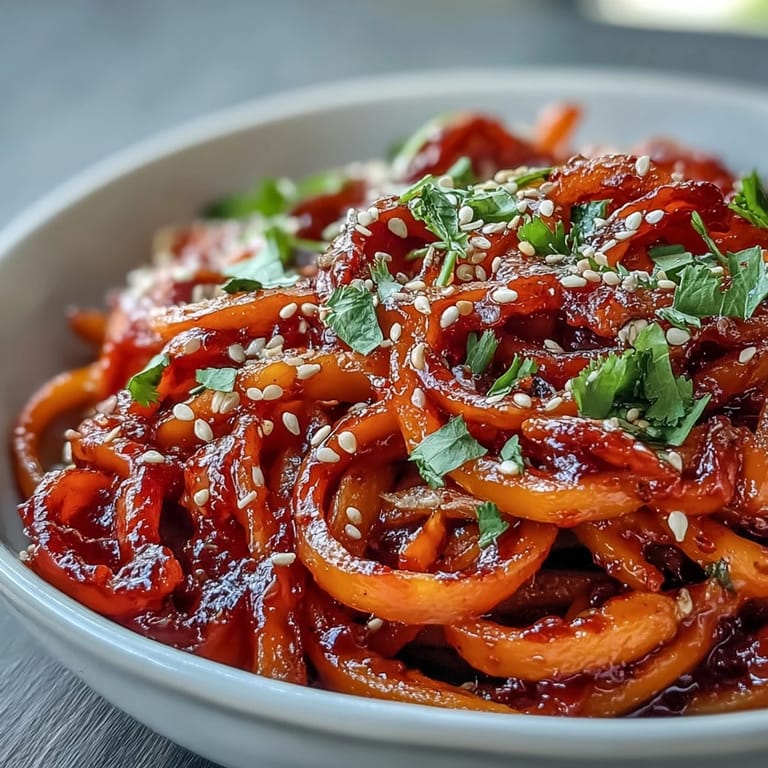
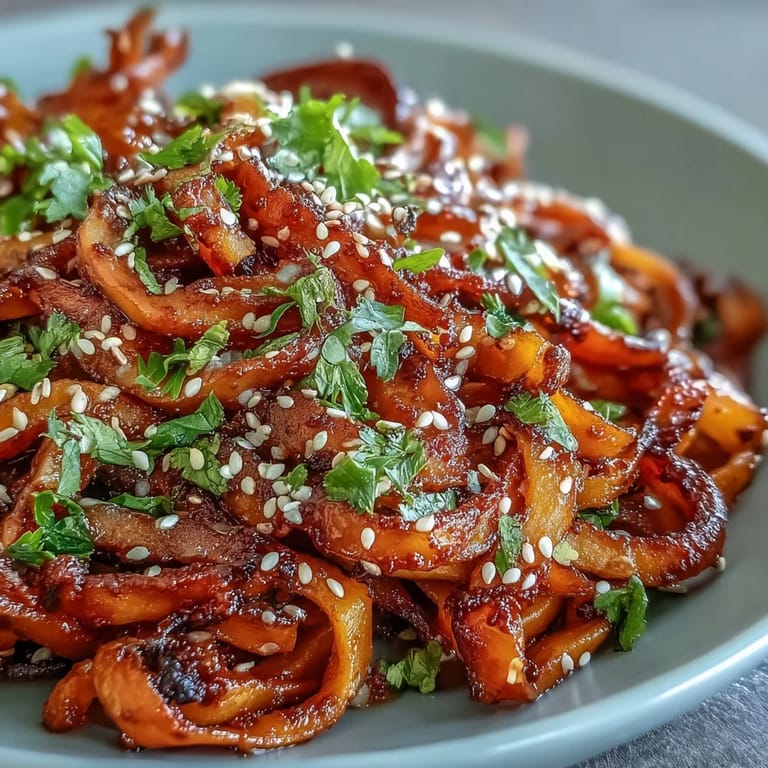
Save The first time I worked with swede, I was skeptical about how this humble root vegetable would handle bold Korean flavors. I'd been experimenting with vegetable noodles and wanted something that could stand up to a punchy gochujang dressing without falling apart. After roasting the swede ribbons until they developed these gorgeous golden edges, I knew I was onto something special. The way the natural sweetness emerges after roasting creates this incredible foundation for the spicy, savory sauce.
I made this for my friends last winter when we were all craving something warming but not heavy. The kitchen filled with this incredible aroma of roasting vegetables mixed with the pungent kick of garlic and ginger. Everyone hovered around the stove, sneaking tastes of the dressing and watching the swede transform in the oven. That night, we all sat around with steaming bowls, completely forgetting it was entirely plant-based.
Ingredients
- 1 large swede (rutabaga): This underrated root vegetable becomes absolutely magical when roasted and absorbs the bold gochujang flavors beautifully
- 3 tbsp gochujang: The fermented Korean chili paste brings this incredible depth of umami that you just cannot replicate with anything else
- 250 g dried rice noodles: These provide the perfect neutral base to let all those vibrant flavors shine without competing
- 2 tbsp maple syrup: This natural sweetness balances the heat and creates that addictive sticky glaze that coats every ribbon
- 1 tbsp rice vinegar: Just enough acidity to cut through the richness and brighten all those deep flavors
- 2 spring onions: Fresh oniony bite that adds a crisp contrast to the tender roasted vegetables
Tired of Takeout? 🥡
Get 10 meals you can make faster than delivery arrives. Seriously.
One email. No spam. Unsubscribe anytime.
Instructions
- Roast the swede ribbons:
- Toss the peeled ribbons with vegetable oil, salt and pepper until evenly coated then spread them in a single layer on your baking sheet. Roast at 220°C for 25 to 30 minutes, flipping halfway through, until you see those beautiful golden brown edges developing and the ribbons feel tender when pierced with a fork.
- Cook the rice noodles:
- While the swede roasts, cook the noodles according to the package directions, then drain and rinse immediately under cold water to stop the cooking process and prevent sticking.
- Whisk together the dressing:
- In a medium bowl, combine the gochujang, soy sauce, maple syrup, rice vinegar, sesame oil, grated garlic, grated ginger, and chili flakes. Whisk vigorously until completely smooth, adding water one tablespoon at a time until you reach a pourable consistency.
- Bring it all together:
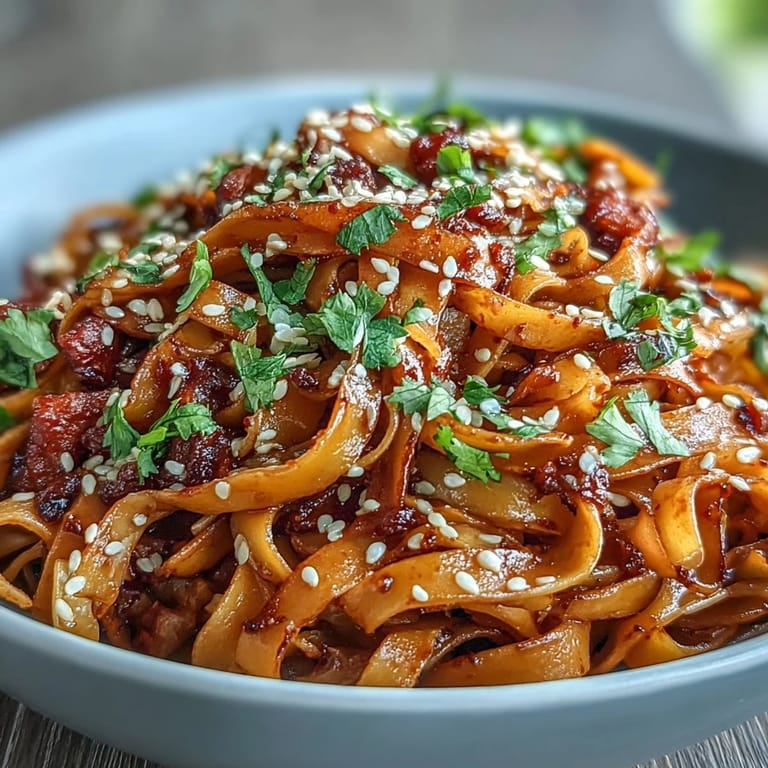
- In your largest mixing bowl, combine the roasted swede ribbons, cooked rice noodles, sliced spring onions, carrot, and bean sprouts. Pour the gochujang dressing over everything and toss gently but thoroughly until every single ribbon and noodle is coated in that vibrant red sauce.
 Save
Save This recipe has become my go-to for dinner parties because it looks impressive served in those large shallow bowls with all the colors on display. I love watching people's faces when they take that first bite, the surprise that something so simple can taste so complex and satisfying.
Making It Your Own
The beauty of this dish lies in its adaptability to whatever you have in your crisper drawer. I have used spiralized sweet potato, butternut squash, and even carrots when swede was not available, each bringing their own subtle sweetness to the party.
Perfecting The Roast
Getting those ribbons cut evenly makes all the difference in how they cook. A mandoline creates perfect ribbons, but a sharp vegetable peeler works beautifully too. Just try to keep them similar in thickness so they roast at the same rate.
Serving Suggestions
This dish holds up well for lunch the next day and actually benefits from the flavors having time to mingle. I like to pack it with extra cilantro and a wedge of lime for a bright, fresh lunch at work. The swede stays tender and the noodles soak up even more of that incredible sauce.
- Sprinkle extra toasted sesame seeds right before serving for a nutty crunch
- Keep some extra gochujang on hand for anyone who wants to kick up the heat
- Lime wedges on the side add a bright pop that cuts through the richness
 Save
Save There is something deeply satisfying about transforming such an unassuming vegetable into something that feels so special and vibrant.
Questions & Answers
- → Can I make this dish gluten-free?
Absolutely. To ensure it's gluten-free, substitute regular soy sauce with tamari and verify that your chosen gochujang brand is certified gluten-free. Some brands may contain wheat.
- → What can I add for extra protein?
For a heartier meal, consider adding pan-fried tofu or edamame. Sautéed mushrooms or chickpeas would also complement the flavors nicely.
- → Can I prepare any parts of this in advance?
Yes, the gochujang dressing can be prepared a day or two ahead and stored in an airtight container in the refrigerator. You can also pre-cut the swede ribbons.
- → What if I don't have swede?
While swede offers a unique texture and flavor, you can substitute it with roasted sweet potato, butternut squash, or even large zucchini ribbons for a similar presentation and delightful taste.
- → How spicy is this dish?
The spiciness primarily comes from the gochujang and optional chili flakes. Gochujang itself has a moderate, complex heat. You can adjust the chili flakes to your preference, or reduce the amount of gochujang for a milder flavor profile.
- → What's the best way to cut swede into ribbons?
A vegetable peeler is effective for thin ribbons, especially for a large swede. For more uniform and slightly wider strips, a mandoline slicer set to a thin setting works exceptionally well, but use caution.